Adolf Hitler, the head of Germany's Nazi Party, was one of the most remarkable and infamous despots of the twentieth 100 years. Hitler exploited financial hardships, well-known discontent, and political infighting to take outright power in Germany starting in 1933. Germany's attack on Poland in 1939 prompted the episode of World War II, and by 1941 Nazi powers had involved a lot of Europe. Hitler's harmful enemy of Semitism and the fanatical quest for Aryan matchless quality energized the homicide of about 6 million Jews, alongside different casualties of the Holocaust. After the tide of war betrayed him, Hitler ended it all in a Berlin fortification in April 1945.
Early Life
Adolf Hitler was brought into the world on April 20, 1889, in Braunau am Inn, a little Austrian town close to the Austro-German outskirts. After his dad, Alois, resigned as a state customs official, youthful Adolf burned through the vast majority of his young life in Linz, the capital of Upper Austria.
Not having any desire to emulate his dad's example as a government employee, he started battling in optional school and at last exited. Alois passed on in 1903, and Adolf sought after his fantasy about being a craftsman, however, he was dismissed from Vienna's Academy of Fine Arts.
After his mom, Klara passed on in 1908, Hitler moved to Vienna, where he sorted out residing painting views and landmarks and sold the pictures. Forlorn, confined and a ravenous peruser, Hitler became inspired by governmental issues during his years in Vienna and created a significant number of the thoughts that would shape the Nazi belief system.
Military Career of Adolf Hitler
In 1913, Hitler moved to Munich, in the German territory of Bavaria. Whenever World War I broke out in the accompanying summer, he effectively appealed to the Bavarian ruler to be permitted to chip in a hold infantry regiment.
Sent in October 1914 to Belgium, Hitler served all through the Great War and won two beautifications for valiance, including the uncommon Iron Cross First Class, which he wore to the furthest limit of his life.
Hitler was injured two times during the contention: He was hit in the leg during the Battle of the Somme in 1916, and briefly dazed by a British gas assault close to Ypres in 1918. After a month, he was recovering in a clinic at Pasewalk, upper east of Berlin, when the news showed up of the truce and Germany's loss in World War I.
In the same way as other Germans, Hitler came to accept the nation's overwhelming loss could be ascribed not to the Allies, but rather to inadequately devoted "backstabbers" at home — a legend that would sabotage the post-war Weimar Republic and set up for Hitler's ascent.
Nazi Party
After Hitler got back to Munich in late 1918, he joined the little German Workers' Party, which intended to join the interests of the common laborers with a solid German patriotism. His talented rhetoric and magnetic energy pushed him into the party's positions, and in 1920 he left the military and assumed responsibility for its misleading publicity endeavors.
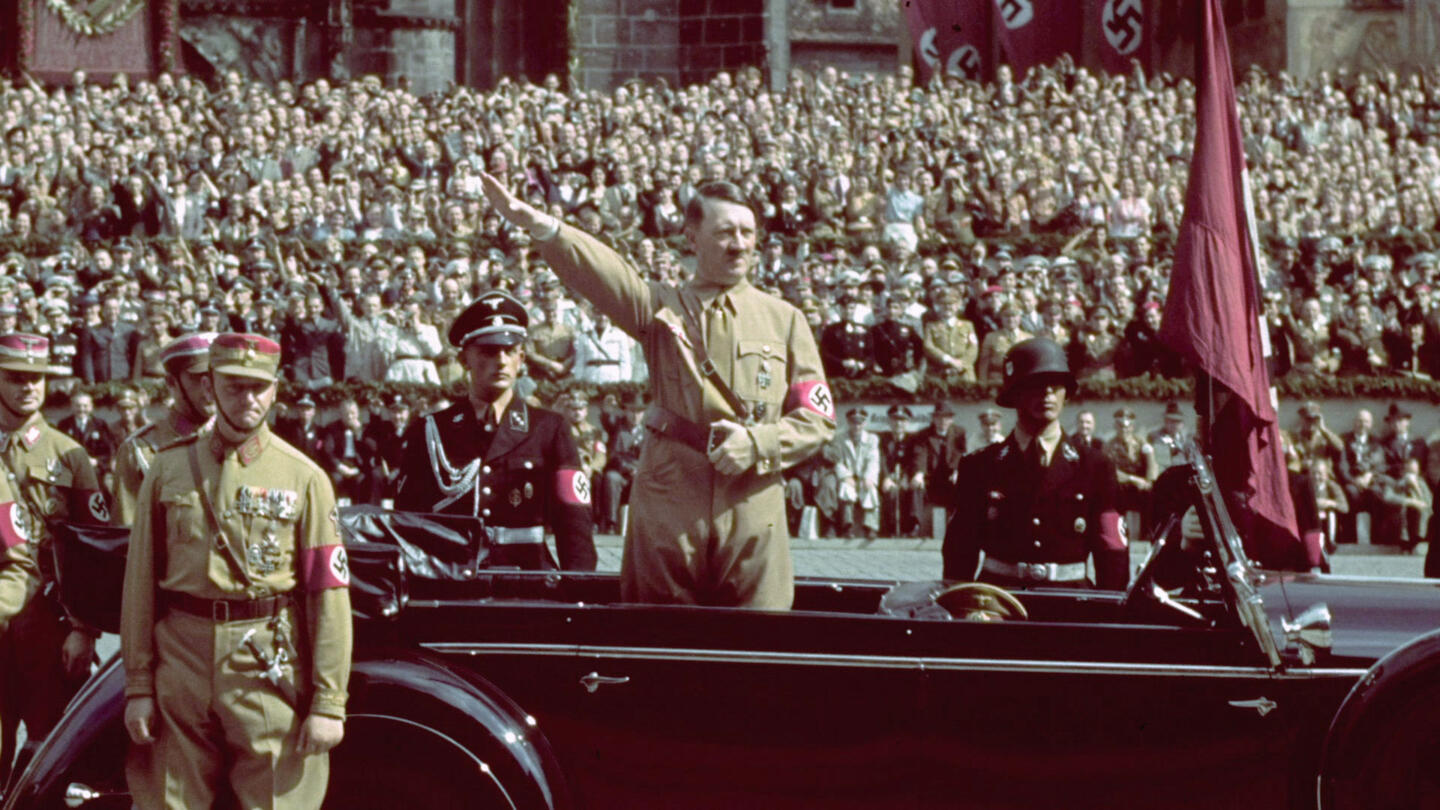
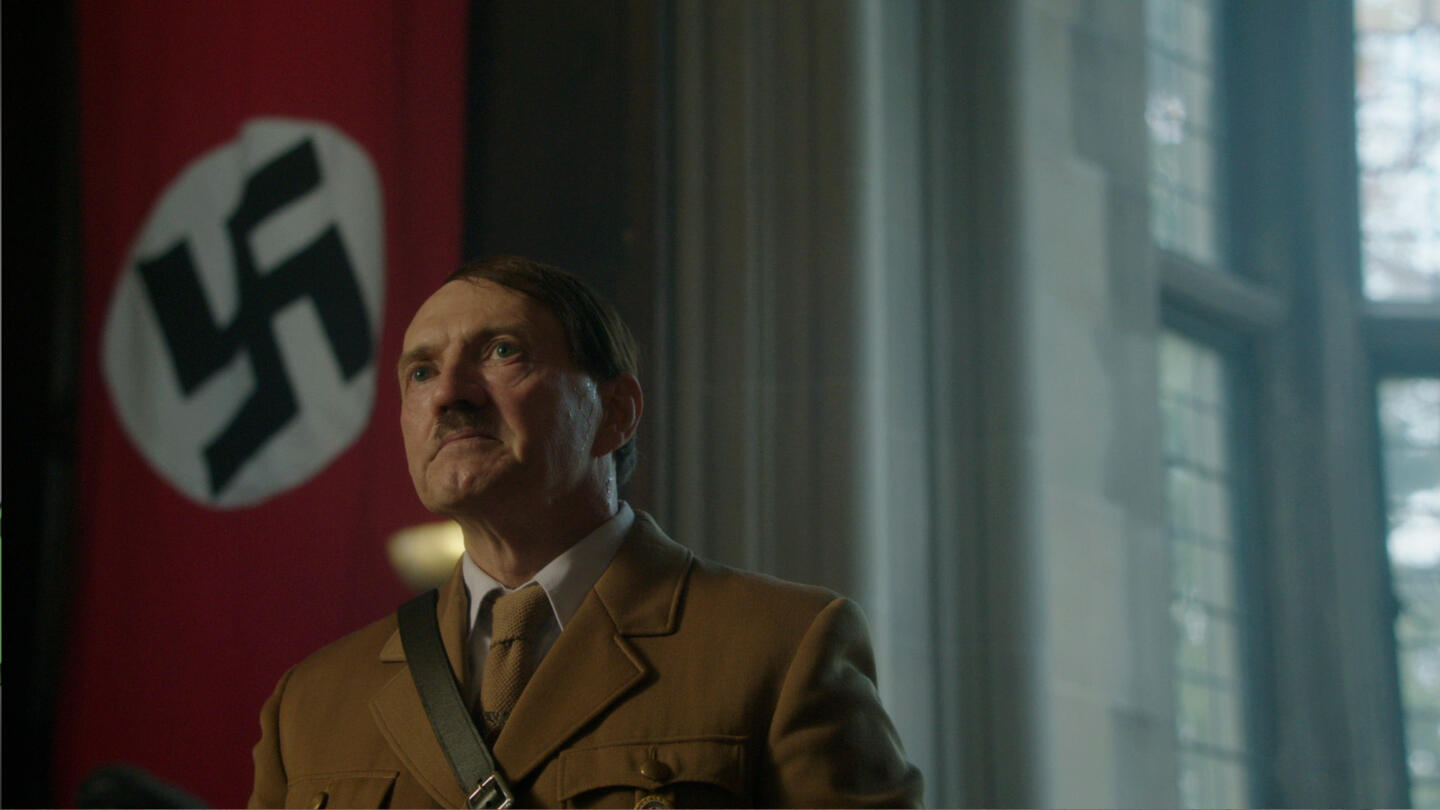
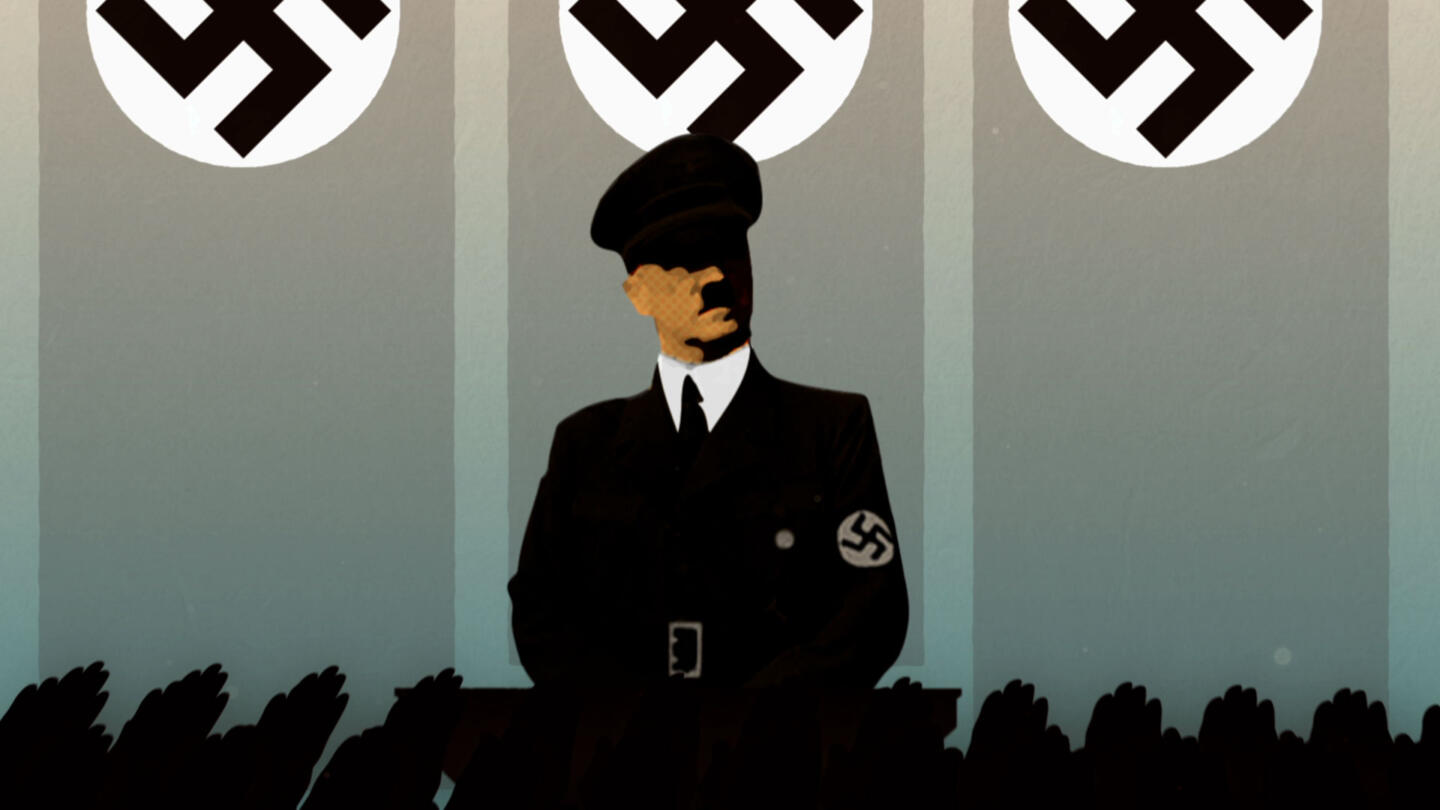
In one of Hitler's strokes of promulgation virtuoso, the recently renamed National Socialist German Workers Party, or Nazi Party, took on a form of the old image of the Hakenkreuz, or snared cross, as its token. Imprinted in a white circle on a red foundation, Hitler's insignia would take on startling emblematic power in the years to come.
Toward the finish of 1921, Hitler drove the developing Nazi Party, exploiting far-reaching discontent with the Weimar Republic and the rebuffing terms of the Versailles Treaty. Many disappointed previous armed force officials in Munich would join the Nazis, remarkably Ernst Röhm, who selected the "solid arm" crews — known as the Sturmabteilung (SA) — which Hitler used to safeguard party gatherings and assault rivals.
Brew Hall Putsch
On the evening of November 8, 1923, individuals from the SA and others constrained their direction into an enormous larger corridor where another conservative chief was tending to the group. Employing a gun, Hitler broadcasted the start of a public upheaval and drove marchers to the focal point of Munich, where they got into a weapon fight with police.
Hitler escaped rapidly, however, he and other renegade pioneers were subsequently captured. Even though it bombed fabulously, the Beer Hall Putsch laid out Hitler as a public figure, and (according to many) a legend of conservative patriotism.
'Mein Kampf'
Gone after for injustice, Hitler was condemned to five years in jail, however, would serve just nine months in the overall solace of Landsberg Castle. During this period, he started to direct the book that would turn into "Mein Kampf" ("My Struggle"), the main volume of which was distributed in 1925.
In it, Hitler developed the nationalistic, against Semitic perspectives he had started to create in Vienna in his mid-twenties, and spread out plans for Germany — and the world — he tried to make when he came to drive.
Hitler would complete the second volume of "Mein Kampf" after his delivery while unwinding in the mountain town of Berchtesgaden. It sold humbly from the beginning, yet with Hitler's ascent, it turned into Germany's top-rated book after the Bible. By 1940, it had sold somewhere in the range of 6 million duplicates there.
Hitler's subsequent book, "The Zweites Buch," was written in 1928 and contained his considerations on international strategy. It was not distributed in that frame of mind because of the unfortunate beginning deals of "Mein Kampf." The main English interpretations of "The Zweites Buch" didn't show up until 1962 and were distributed under the title "Hitler's Secret Book."
Aryan Race
Fixated on race and the possibility of ethnic "immaculateness," Hitler saw a characteristic request that set the alleged "Aryan race" at the top.
As far as he might be concerned, the solidarity of the Volk (the German public) would track down its most genuine manifestation, not the inequitable or parliamentary government, but rather in one preeminent pioneer, or Führer.
"Mein Kampf" additionally tended to the requirement for Lebensraum (or living space): In request to satisfy its predetermination, Germany ought to assume control over terrains toward the east that were presently involved by "substandard" Slavic people groups — including Austria, the Sudetenland (Czechoslovakia), Poland and Russia
The Schutzstaffel (SS)
When Hitler left jail, monetary recuperation had reestablished some famous help for the Weimar Republic, and backing for traditional causes like Nazism seemed, by all accounts, to be winding down.
Throughout the following couple of years, Hitler disappeared and dealt with redesigning and reshaping the Nazi Party. He laid out the Hitler Youth to put together young people and made the Schutzstaffel (SS) a more solid option in contrast to the SA.
Individuals from the SS wore dark regalia and swore an individual pledge of unwaveringness to Hitler. (After 1929, under the authority of Heinrich Himmler, the SS would create from a gathering of nearly 200 men into a power that would overwhelm Germany and threaten the remainder of involved Europe during World War II.)
Eva Braun
Hitler invested quite a bit of his energy at Berchtesgaden during these years, and his stepsister, Angela Raubal, and her two little girls frequently went along with him. After Hitler became beguiled by his excellent blonde niece, Geli Raubal, his possessive envy evidently drove her to end it all in 1931.
Crushed by the misfortune, Hitler would think about Geli the main genuine affection issue of his life. He before long started an involved acquaintance with Eva Braun, a shop aide from Munich, however, would not wed her.
The overall Great Depression that started in 1929 again undermined the security of the Weimar Republic. Still up in the air to accomplish political power to influence his unrest, Hitler developed Nazi help among German preservationists, including armed force, business, and modern pioneers.
The Third Reich
In 1932, Hitler went against the conflict legend Paul von Hindenburg for president and got 36.8 percent of the vote. With the public authority in disorder, three progressive chancellors neglected to keep up with control, and in late January 1933 Hindenburg named the 43-year-old Hitler as chancellor, covering the shocking ascent of a far-fetched pioneer.
January 30, 1933, denoted the introduction of the Third Reich, or as the Nazis called it, the "Thousand-Year Reich" (after Hitler's brag that it would persevere for a thousand years).
Reichstag Fire
Though the Nazis never attained more than 37 percent of the vote at the height of their popularity in 1932, Hitler was able to grab absolute power in Germany largely due to divisions and inaction among the majority who opposed Nazism.
After a devastating fire at Germany’s parliament building, the Reichstag, in February 1933—possibly the work of a Dutch communist, though later evidence suggested Nazis set the Reichstag fire themselves—Hitler had an excuse to step up the political oppression and violence against his opponents.
On March 23, the Reichstag passed the Enabling Act, giving full powers to Hitler and celebrating the union of National Socialism with the old German establishment (i.e., Hindenburg).
That July, the public authority passed a regulation expressing that the Nazi Party "establishes the main ideological group in Germany," and inside the space of months generally non-Nazi gatherings, worker's guilds, and different associations had stopped existing.
His dictatorial power presently secures inside Germany, and Hitler turned his eyes toward the remainder of Europe.
Hitler's Foreign Policy
In 1933, Germany was strategically secluded, with a frail military and threatening neighbors (France and Poland). In a renowned discourse in May 1933, Hitler sent out a shockingly propitiatory vibe, guaranteeing Germany upheld demobilization and harmony.
Be that as it may, behind this settlement system, the control and extension of the Volk remained Hitler's superseding point.
By early the next year, he had removed Germany from the League of Nations and started to mobilize the country fully expecting his arrangements for regional success.
Night of the Long Knives
On June 29, 1934, in the notorious Night of the Long Knives, Hitler had Röhm, previous Chancellor Kurt von Schleicher, and many other tricky individuals from his own party killed, specifically irksome individuals from the SA.
At the point when the 86-year-old Hindenburg passed on August 2, military pioneers consented to join the administration and chancellorship into one position, meaning Hitler would order every one of the militarymilitaries of the Reich.
Persecution of Jews
On September 15, 1935, entry of the Nuremberg Laws denied Jews German citizenship, and banished them from a wedding or having relations with people of "German or related blood."
However the Nazis endeavored to minimize their oppression of Jews to appease the global-local area during the 1936 Berlin Olympics (where German-Jewish competitors were not permitted to contend), extra announcements throughout the following couple of years disappointed Jews and removed their political and social equality.
Notwithstanding its inescapable enemy of Semitism, Hitler's administration likewise looked to lay out the social strength of Nazism by consuming books, driving papers bankrupt, involving radio and films for publicity purposes, and constraining educators all through Germany's school system to join the party.
A significant part of the Nazi oppression of Jews and different targets happened on account of the Geheime Staatspolizei (GESTAPO), or Secret State Police, an arm of the SS that extended during this period.
The outbreak of World War II
In March 1936, against the exhortation of his officers, Hitler requested German soldiers to reoccupy the disarmed left bank of the Rhine.
Over the following two years, Germany finished up unions with Italy and Japan, attached Austria, and moved against Czechoslovakia — all basically without opposition from Great Britain, France, or the remainder of the global-local area.
When he affirmed the coalition with Italy in the purported "Agreement of Steel" in May 1939, Hitler then, at that point, marked a peace settlement with the Soviet Union. On September 1, 1939, Nazi soldiers attacked Poland, at last inciting Britain and France to announce battle against Germany.
Blitzkrieg
After requesting the control of Norway and Denmark in April 1940, Hitler embraced an arrangement proposed by one of his commanders to go after France through the Ardennes Forest. The raid ("lightning war") assault started on May 10; Holland immediately gave up, trailed by Belgium.
German soldiers made it the whole way to the English Channel, driving British and French powers to empty altogether from Dunkirk in late May. On June 22, France had to sign a truce with Germany.
Hitler had would have liked to compel Britain to look for harmony also, yet when that bombed he proceeded with his assaults on that nation, trailed by an intrusion of the Soviet Union in June 1941.
After the assault on Pearl Harbor that December, the United States pronounced battle on Japan, and Germany's coalition with Japan requested that Hitler announce battle on the United States too.
By then in the contention, Hitler moved his focal system to zero in on breaking the coalition of his primary rivals (Britain, the United States, and the Soviet Union) by compelling one of them to reconcile with him.
Concentration Camps
Starting in 1933, the SS had worked as an organization of inhumane imprisonments, including a famous camp at Dachau, close to Munich, to hold Jews and different focuses of the Nazi system.
After war broke out, the Nazis moved from removing Jews from German-controlled domains to annihilating them. Einsatzgruppen, or portable passing crews, executed the whole Jewish people group during the Soviet attack, while the current inhumane imprisonment network extended to incorporate concentration camps like Auschwitz-Birkenau in involved Poland.
Notwithstanding constrained work and mass execution, certain Jews at Auschwitz were designated as the subjects of horrendous clinical tests done by eugenicist Josef Mengele, known as the "Heavenly messenger of Death." Mengele's trials centered around twins and uncovered 3,000 youngster detainees to sickness, deformation, and torment underhandedly.
However the Nazis likewise detained and killed Catholics, gay people, political dissenters, Roma (vagabonds), and the incapacitated, overall they designated Jews — nearly 6 million of whom were killed in German-involved Europe by the war's end.
End of World War II
With routs at El-Alamein and Stalingrad, as well as the arrival of U.S. troops in North Africa toward the finish of 1942, the tide of the conflict betrayed Germany.
As the contention proceeded, Hitler turned out to be progressively unwell, segregated, and reliant upon prescriptions regulated by his own doctor.
A few endeavors were made in his life, including one that verged on prevailing in July 1944, when Col. Claus von Stauffenberg established a bomb that detonated during a gathering at Hitler's base camp in East Prussia.
Within a couple of months of the effective Allied intrusion of Normandy in June 1944, the Allies had started freeing urban communities across Europe. That December, Hitler endeavored to coordinate one more hostile through the Ardennes, attempting to divide British and American powers.
In any case, after January 1945, he stayed in a fortification underneath the Chancellery in Berlin. With Soviet powers shutting in, Hitler made arrangements for a last-ditch obstruction before at last leaving that arrangement.
How Did Adolf Hitler Die?
At 12 PM the evening of April 28-29, Hitler wedded Eva Braun in the Berlin fortification. After directing his political confirmation, Hitler shot himself in his suite on April 30; Braun took poison. Their bodies were scorched by Hitler's directions.
With Soviet soldiers possessing Berlin, Germany gave up genuinely on all fronts on May 7, 1945, getting the conflict in Europe to a nearby.
Eventually, Hitler's arranged "Thousand-Year Reich" endured a little more than 12 years, yet unleashed unimaginable obliteration and decimation during that time, everlastingly changing the historical backdrop of Germany, Europe, and the world.
Sources
William L. Shirer, The Rise, and Fall of the Third Reich
I wonder – Adolf Hitler: Man and Monster, BBC.
The Holocaust: A Learning Site for Students, U.S. Holocaust Memorial Museum.




0 Comments